The DemAlps Team
The DemAlps Team
The DemAlps project is lead by the principal investigator Marta Gravela, at the Università di Torino, who has assembled a group of postdoctoral fellows, researchers, and PhD candidates, and invites external contributions (affiliate researchers) as well.
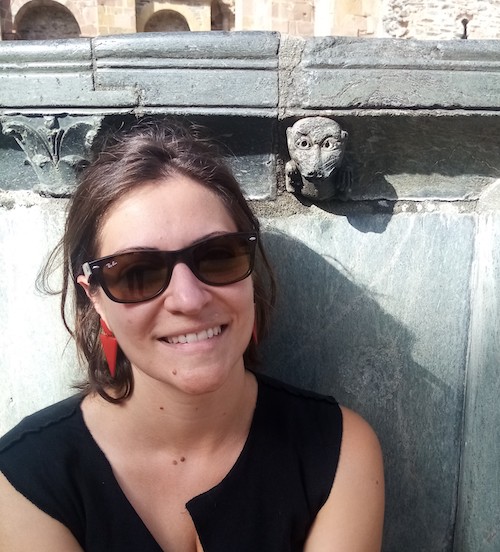
Marta Gravela
Marta Gravela is Associate Professor of Medieval History at the University of Turin and Principal Investigator of the projects ERC DemAlps Democracies of the Alps. Issues, Practices and Ideals of Politics in Mountain Communities, 1300-1500 and PRIN https://studistorici.unimi.it/it/ricerca/attivita-e-risultati-di-ricerca/aree-e-linee-di-ricerca/writing-communities. She has previously worked at the State University of Milan, the University of Cambridge, the Ecole Normale Supérieure de Lyon and is an affiliate researcher with CIHAM UMR 5648 Lyon-Avignon. Her research interests focus on the social and political history of the late Middle Ages, with particular reference to topics such as family and kinship, citizenship, social inequalities, urban taxation and public debt, lords and communities in the Alpine area. Fond of the mountains, she loves trekking and exploring Alpine territories to understand their historical and environmental transformations.
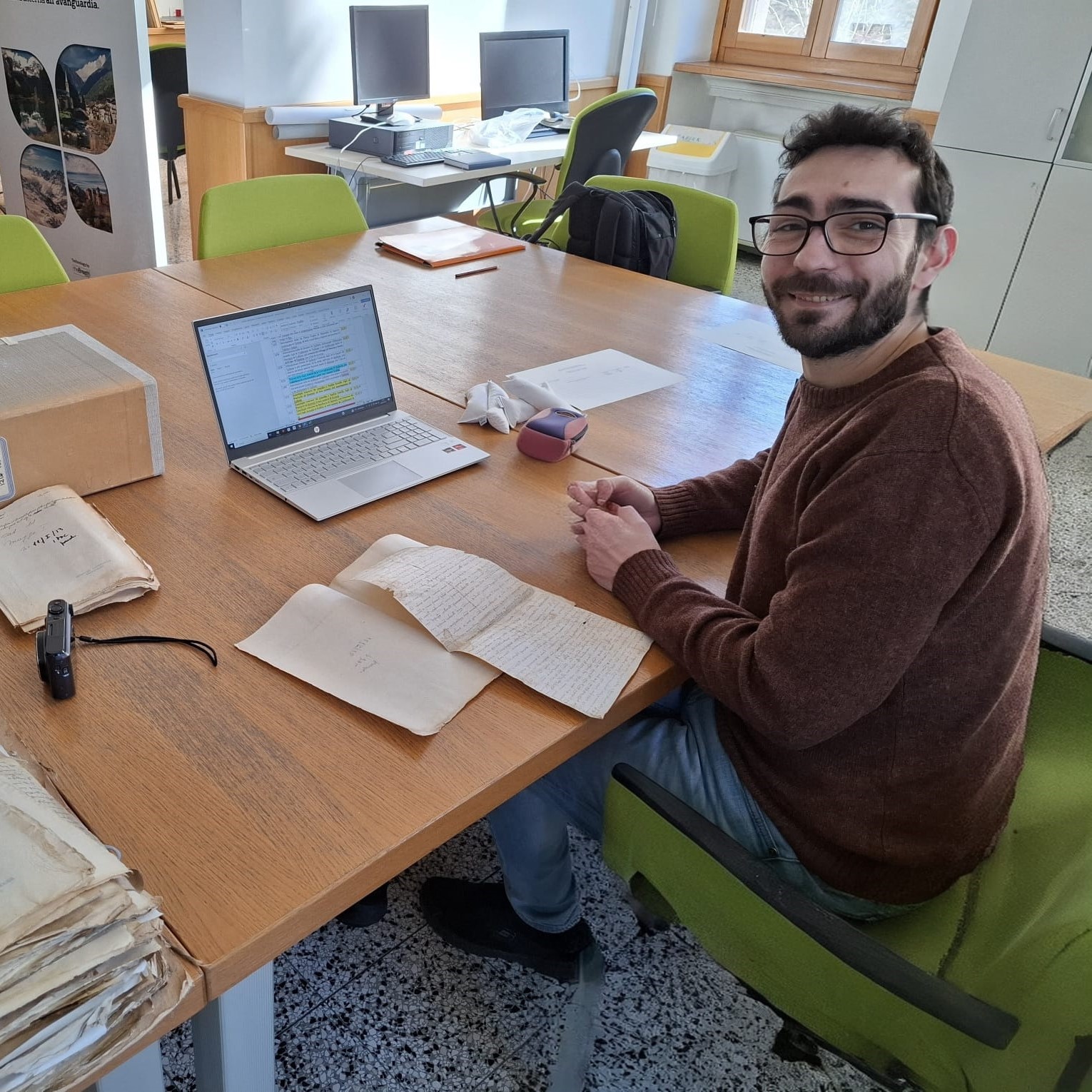
Ciro Berardinetti
Ciro Berardinetti is a postdoctoral fellow in the DemAlps project with a grant co-funded by the Department of Historical Studies at the University of Turin. He obtained his PhD in 2024 from the University of Rome Tor Vergata with a thesis on the relationship between monarchy, lordships, communities, and officers of justice in the Kingdom of Naples in the 15th century.
In the DemAlps project, he studies community writings preserved in the archives of noble families in Piedmont and Valle d'Aosta. Specifically, his research focuses on the multiple forms of political coordination possible within Alpine communities.
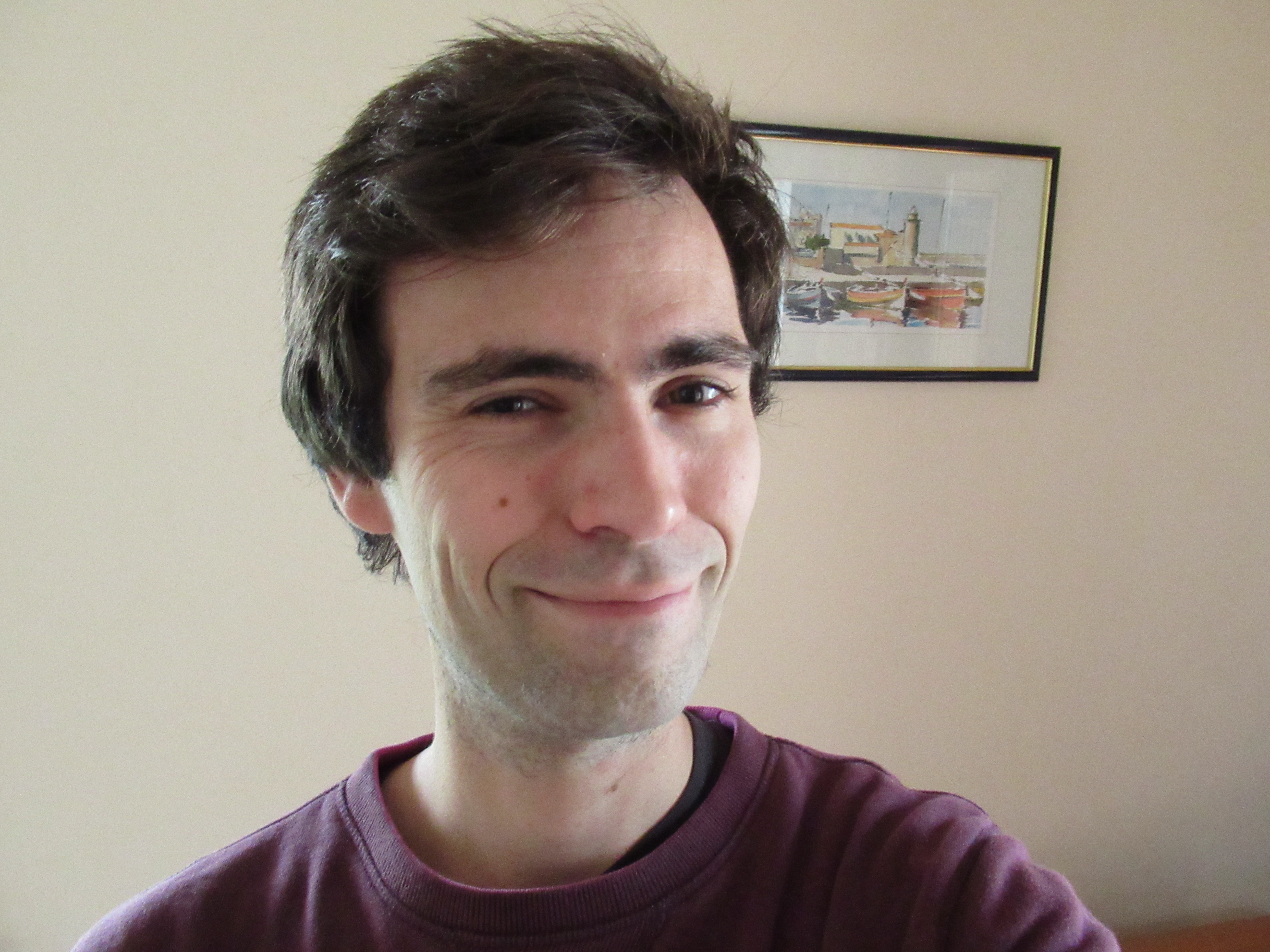
Florentin Briffaz
Florentin Briffaz is a medievalist and postdoctoral fellow with DemAlps at the Università di Torino. He studied Medieval History at the Ecole Normale Supérieure de Lyon (master degree) and he received his PhD from the Université Lumière Lyon 2 in 2025. His PhD dissertation, "Between Saône and Mont-Blanc: a political and social history of the Savoyard nobility (mid-13th-mid-15th centuries)", focused on relationships between nobility and princely state. In his work, he intended to examine the nobility in the north-western areas of Savoy (borders territories from Bresse to Faucigny) and to understand how this diverse group integrated into the central state of the counts and then dukes of Savoy. He led a multi-scale approach through princely archives (general accounts) and family archives (receipts, wills, marriage contracts in particular) from the lineages themselves, which made it possible to identify the writing practices of the nobles themselves.
In the DemAlps project he focuses on the western part of the Alps in Savoy. He studies relationships between mountain coummunities and elites (in and out of the communities, especially local lords and local nobility). He intends to make a prosopographic investigation of "syndics" and other representatives of the communities. This political and social history is explored thanks to communities archives held in Archives départementales de Haute-Savoie and Archives départementales de Savoie.
As part of the DEMALPS team, he is tracking and analyzing archives, in a comparative perspective with various areas, and collaborating on the database and other activities of the project.
He loves exploring Alpine various territories in order to see their heritage and to understand their rich history and he loves skiing and hiking.
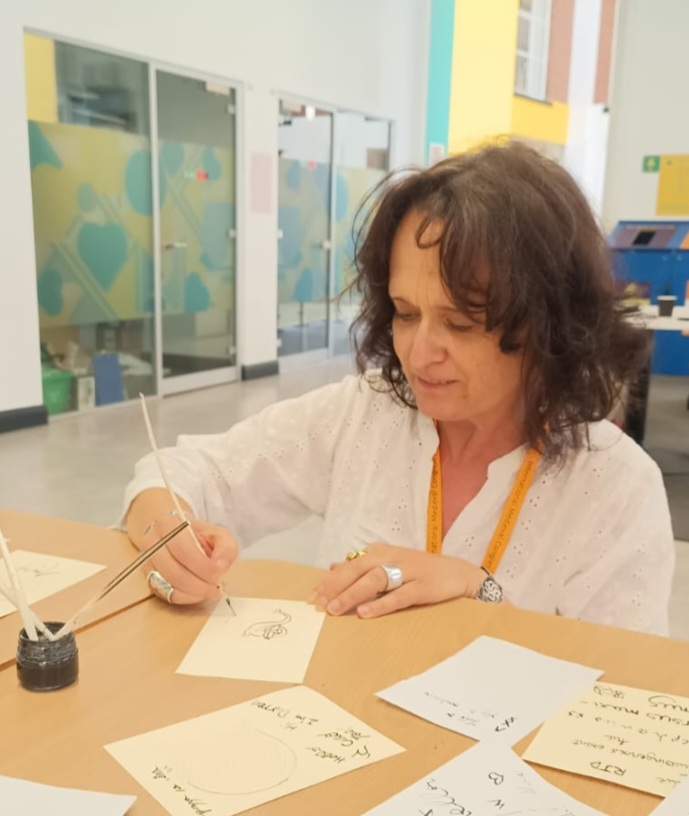
Elisabetta Canobbio
Elisabetta Canobbio has combined her job as an archivist with her research for several years and now is a postdoctoral fellow with DemAlps. Her research interests focus on the ecclesiastical politics in Italian regional states in the late Middle Ages, the interrelationships between communities and religious life as well as the documentary history of ecclesiastical institutions.
In the DemAlps project she is exploring archives in the Canton of Ticino in order to study the records of the Swiss communities in a comparative perspective with those of the Western Alps.
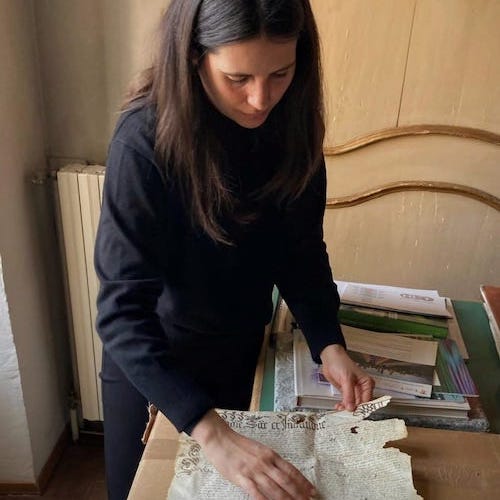
Chiara Corradini
A graduate in Medieval History from the University of Naples (2019), in 2023 Chiara Corradini obtained a second-level master’s degree in Creation, Management and Preservation of digital archives at the University of Macerata. She is currently enrolled in the school of Archivistica, Paleografia and Diplomatica of the State Archives of Turin. In the DemAlps project she focuses on the census of the late medieval sources present in the municipal archives of the western Italian Alps and collaborates on the database development. Her research deals with the archival history of the records of medieval communities by looking at the accretion and conservation practices used from the late Middle Ages to modernity. A lover of mountains, she enjoys escaping to the rocks for hiking and climbing.
Noémie Lacroix
Noémie Lacroix is currently PhD candidate at the University of Turin within the project DemAlps, focusing on rural communities of the Durance’s valley, from Briançon to Embrun between the 14th and the 15th centuries. During her double masters degree in Digital Humanities and Medieval History from the University of Lyon 2 (France), Noémie Lacroix worked on the women's roles in trade in Lyon and Bologne at the end of the Middle Ages. Thanks to this training, in 2021 she joined the ANR-DFG research project CoMOR, which studied medieval and early modern fairs. During this experience, she populated the project’s database with historical data, especially city deliberations from Lyon and Geneva at the end of the Middle Ages. Additionally, she contributed to the organisation of the exhibition at the Archives Départementales de Lyon and the permanent virtual exhibition.
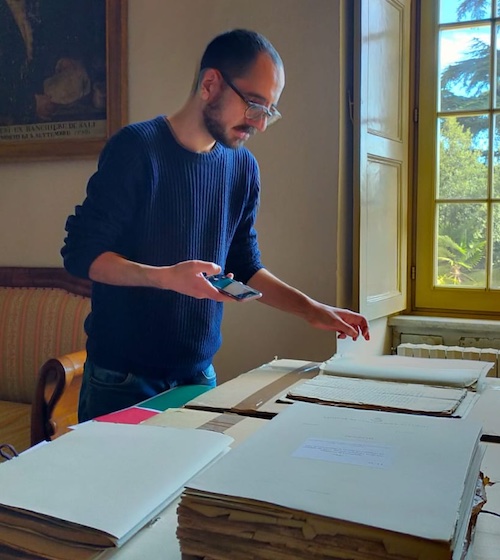
Davide Morra
Davide Morra is a medievalist and postdoctoral fellow with DemAlps. He received his PhD from the University of Naples “Federico II” in 2021, with a project that led him to collaborate with the Italian software house @Cult in Rome and the French OpenEdition center in Marseille. His dissertation focused both on the digital edition of a manuscript and on the study of the interaction between power, society and tax systems in the late medieval Kingdom of Naples. In 2022-2023, he earned a degree in Archival Science from the Vatican School while doing his first post-doc in Naples and working on his upcoming monograph. Communities and the process of community-building at the various levels in which it takes place, also in its interrelationships with the state-building process, have long been a crucial part of his research interests. As part of the DEMALPS team he explores community archives on the Italian side of the Western Alps, contributing records to project database and studying the rich sources that are emerging from those archives.
Jean-Paul Rehr
Jean-Paul Rehr is a postdoctoral fellow with DemAlps at the Università di Torino. Originally from Toronto, Canada, Jean-Paul spent 15 years in supply chain management and technology startups before leaving for Europe to study medieval history. His PhD dissertation Heresy, Politics, and Inquisition in the County of Toulouse. Edition and Study of Bibliothèque municipale de Toulouse, ms. 609: The Register of the “Great Inquisition” at Toulouse, 1245-46 reflects his interest in researching medieval social, political and religious history using digital methods. Beyond the “natively digital”, open access edition issuing from his dissertation, Jean-Paul has led the development of a number of digital humanities projects including ThEMA, CoMOR, and Computus.
Andrea Barsacchi
Università degli Studi di Milano

Clément Carnielli
Université Lyon 2

Giacomo Fadda
Università di Torino/Université Lyon 2
Patrick Hegarty-Morrish
Oxford University
Juliette Lassalle
CNRS-CEPAM UMR 7264 – Université de Nice Côte d’Azur