The Project
Project Overview
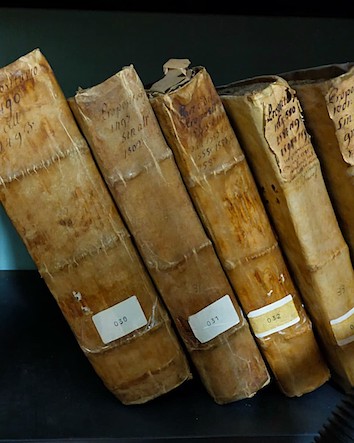
How did mountain populations make political decisions in the late Middle Ages? The ERC research project DEMALPS studies late medieval mountain areas traditionally portrayed as the cradle of radically new political experiences, inspired by original values and practices of self-governance. To verify this assumption, the focus of the project is on the fourteenth- and fifteenth-century Western Alps, a broad territory (including modern French, Italian and Swiss regions within the boundaries of the Alpine convention) which saw unprecedented political unrest and experimentation with forms and institutions. Based on a rich corpus of sources (records of assembies, statutes, community contracts, accounts, among the most important), mostly scattered across local and regional archives, DEMALPS offers an extraordinary insight into the Alpine inhabitants’ political ideals and connections, explored through an interdisciplinary approach combining medieval history, digital humanities, diplomatics, and archival science. DEMALPS is a native digital project specifically designed for collaborative work, thanks to this online application which enables collecting, analysing and sharing data within the team, the scholarly community and the general public.
Communities at the margins?
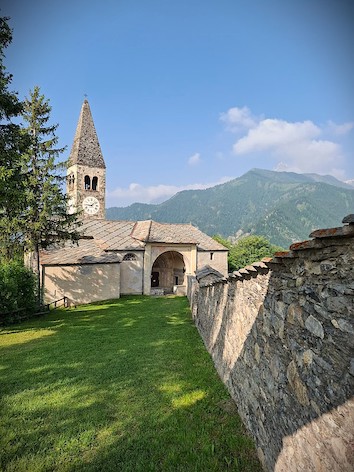
Today more than 14 million people live in the Alpine territories following over a century of significant depopulation. However, in current public discourse mountain areas are still often depicted as an isolated and culturally backward world, fragmented into a multitude of small and frequently conflicting villages; a reactionary world subject to decisions made by central administrators elsewhere, against which resistance and protest emerge as the sole political expressions. Despite obvious geomorphological and environmental constraints, the Alps have actually always been an area densely populated (approx. 3 million people at the end of the Middle Ages) and of intense connection rather than a border: an area crossed by several trade routes, marked by short and long-distance transhumance and seasonal migration, which multiplied the contacts of local inhabitants with the ‘outer’ world.With very few exceptions, historians of the late Middle Ages and the early modern period have largely investigated mountain communities through the lens of protest and revolt, and from the perspective of peripheral areas. However, such external and top-down representation of mountain communities fails to grasp the complexity of their political ideals and practices, their cultural and social relevance. Overcoming this picture of Alpine populations as either reactionary or marginal and passive actors is the main goal of the DEMALPS project.
Why the Western Alps?
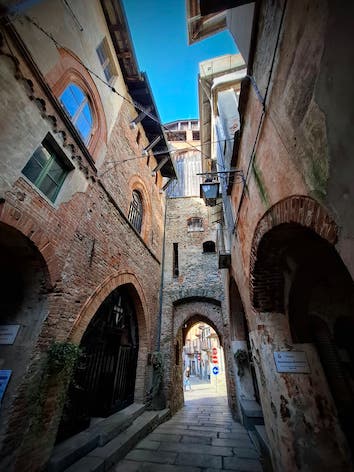
The late medieval Western Alps are considerably understudied, despite their crucial importance in economic and demographic as well as political terms; several relevant political experiences, such as the Escartons or the Tuchini, emerged here. Divided between numerous principalities, secular and ecclesiastical lordships, partially or fully autonomous communities, this region also included different cultures, linguistic traditions (from French to Occitan, from Franco-Provençal to Walser German) and even religious minorities, such as the Waldensians in Provence as well as in the valleys Pellice, Chisone and Germanasca on the ‘Italian’ side. The ‘border’ position of the region also made it open to cultural and political exchanges and influences with the empire, the kingdom of France and the Italian communal cities and towns.Last but not least, this area preserved an outstanding corpus of sources. Late medieval records in the archives of towns, villages and regional institutions are abundant on both sides of the Western Alps. Indeed, this is the only region of the Alps where records of community assemblies have survived in large quantities. These specifically allow profound investigation into decision-making practices and political ideals of villagers: council proceedings reported the composition of assemblies, debates and decisions, lists of officers, correspondence with other communities, lords and dukes, while statutes and community deeds further prove political ideals and practices, and fiscal and accounting records how communities managed collective resources.
Our research goals
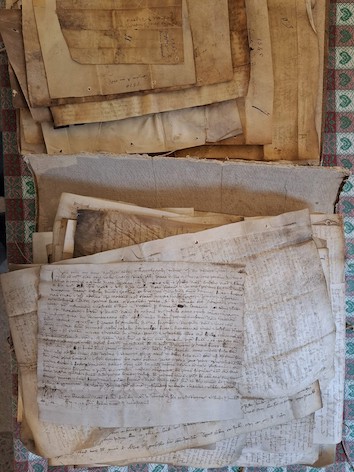
DEMALPS aims to uncover the political ideals and practices of Alpine communities as a way to better understand the social and political transformations of Europe at the turn of the Middle Ages. In order to do this, we are building a native digital project to collect and interrogate data, elaborate and adjust research questions, make information, repertories, maps, graphs, and various research tools available to the scholarly community and the general audience. Through our especially designed application we aim to:
- Understand the practices and protagonists of Alpine ‘democracies’, the content of political debate, and the foundations of political action of Alpine populations
- Explore documentary and archival processes in the late medieval Alps and provide new updated tools to keep studying them
- Enhance awareness of the collective past, no matter how distant, and help preserving and promoting such an extraordinary resource as local historical records, in close collaboration with the municipal, departmental and regional archives, the Soprintendenza Archivistica e Bibliografica del Piemonte e della Valle d’Aosta and various cultural heritage institutions
Our research methods
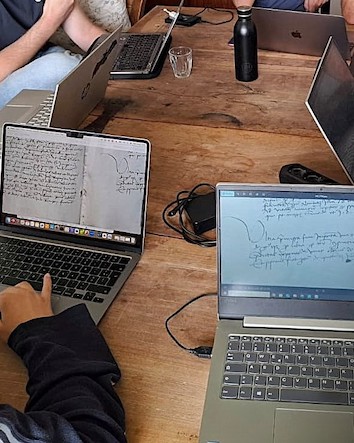
DEMALPS is the first native digital project specifically designed for real-time collaborative work and sharing data in medieval history at this scale. The project embeds principles of FAIR data (findable, accessible, interoperable, and reusable) in the very research process in order to accomplish this, thus enhancing ‘traditional’ historical research. Our research methodology implies:
- fieldwork: team members are travelling across the Alps to visit dozens of historical archives (mostly municipal and départementales, but also private and state archives) and collect sources produced and preserved by Alpine communities
- digital methodology: our online application, especially designed by the team, enables us to collect, analyse and share data, no matter where the researcher is located
- historical analysis: three macro-areas under investigation (practices of democracy, the foundations of political action, and community life issues)
- archival and diplomatic analysis: production and preservation of records, notarial activity, writing and legal traditions are comparatively examined
Essential DemAlps Bibliography
For full project bibliography see https://www.demalps.com/bibliography